Articles
Probate Court: The Legal Trap That Could Drain Your Family's Inheritance—And the One Way to Avoid It

Seth Kniep

Articles
Seth Kniep
There is a process baked into American law—dating back over 400 years—that is quietly designed to extract billions of dollars from grieving families every single year.
It’s called probate court.
And here’s the part that should stop you cold: it doesn’t discriminate by wealth. Whether you leave behind a $150,000 home or a $10 million portfolio, your estate—and your family—can be dragged through it the moment you die without the right plan in place.
In 2023, probate courts across the United States handled over $60 billion in estate assets, with approximately 2.6 million probate cases filed annually, according to the American Bar Association. Despite this, only 11% of American adults currently have a trust, and 55% have no estate planning documents whatsoever. PSS
This isn’t a wealthy-family problem. It’s everyone’s problem. And the solution is simpler than most people think.
Probate law wasn’t invented in America. It was imported.
The earliest American settlers brought the practice from England, and it took root in the original colonies in the 1600s—more than 100 years before the United States even existed as a nation. At its core, probate was designed to provide a legal mechanism for distributing a deceased person’s assets when no clear plan existed.
The problem? It was never designed with efficiency—or your family’s wellbeing—in mind.
Today, probate court functions as a state-supervised legal proceeding in which a judge oversees the distribution of your estate after you die. If you don’t have a properly structured plan in place, your assets don’t automatically pass to your spouse or children. By law, they pass through this process first.
The average probate process costs between 5% and 15% of the total estate value, encompassing personal representative fees, attorney fees, accounting fees, appraisal and business valuation fees, bond fees, and other administrative costs. Some sources put the ceiling even higher in contested or complex estates. Acadviser
On a $500,000 estate, that’s $25,000 to $75,000—gone before your family receives a single dollar.
On a $1,000,000 estate, that’s $50,000 to $150,000 in fees alone.
The average modest estate can take anywhere from 6 months to 2 years to move through the probate process. Complex estates—especially those with real property in multiple states, business interests, disputed claims, or no will at all—can take far longer.
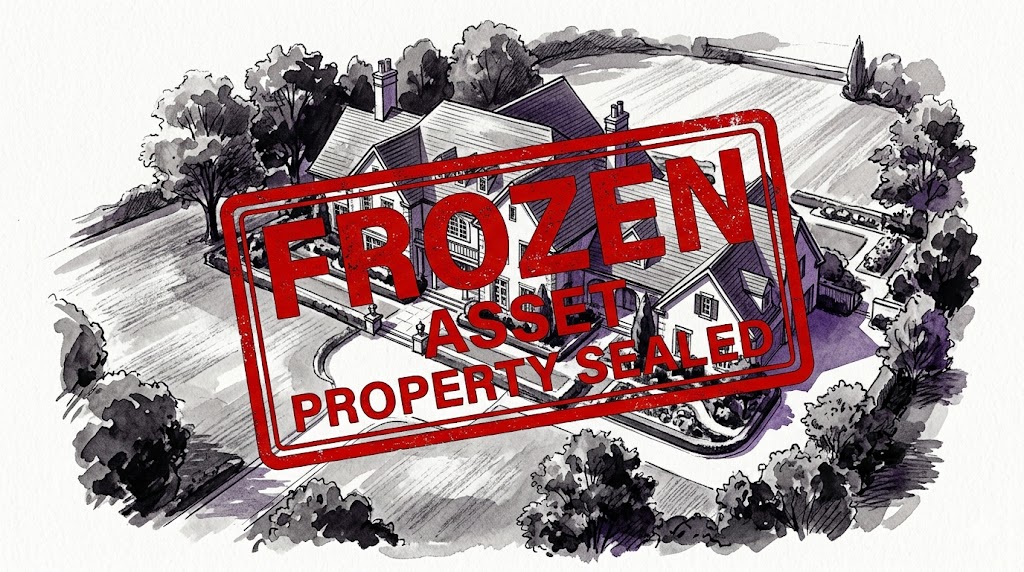
During that entire period, assets are typically frozen. Your family cannot access bank accounts, sell property, or distribute assets. They wait. And while they wait, the costs accumulate.
35% of American adults have either personally experienced or know someone who faced family conflict as a direct result of not having proper estate planning documents. Acadviser
Probate doesn’t just cost money. It costs relationships. It creates an environment in which siblings, cousins, stepchildren, and estranged relatives are legally invited to make claims against your estate—turning your family’s grief into a courtroom battle.
This is where probate gets especially dangerous—and where fraud enters the picture.
When your estate enters probate, the government is legally required to notify any potential heirs or claimants. That notice is public. Anyone who believes they may have a right to a portion of your estate—a stepchild you haven’t spoken to in years, a distant relative, a former business partner—can file a claim.
If their claim is rejected, they can sue. And estate litigation is among the most expensive legal proceedings that exist. Litigation costs skyrocket once a case goes to court, with some attorney rates reaching $5,000 to $10,000 per hour for complex estate battles.
Who pays for those lawsuits? Your estate.
Beyond family conflict, the public nature of probate records has given rise to an entire industry of fraud. Criminals actively monitor probate filings—particularly for estates with significant assets—and use the public information to impersonate deceased individuals, redirect funds, and target surviving family members while they are at their most vulnerable.
Howard Hughes was one of the wealthiest men in American history—an aviator, filmmaker, and industrialist whose estate at the time of his death in April 1976 was valued at over $2 billion.
He died without a will, leaving behind an estate complicated by hundreds of would-be heirs, dozens of disputed documents, and legal proceedings that stretched across multiple states. Over 600 people came forward claiming to have an interest in his fortune, and over 40 different documents were produced—each one claiming to be the “one true” last will and testament of Howard Hughes.
The Howard Hughes estate was not fully settled until 2010—more than 34 years after his death. Taxes, lawyer fees, and probate fees—amounting in the millions—were paid out of the total estate. A Delaware county official described the case as “an incredible windfall” for the county’s register of wills office, which received $3.3 million in probate fees alone.
34 years. Millions in fees. Hundreds of claimants. All because there was no plan.
Music icon Prince died in 2016 without a will, leaving behind an estate valued at around $156 million. The resulting legal battle lasted six years and cost tens of millions in legal and administrative fees—complicated by his vast musical catalog, unreleased recordings, and the Paisley Park property.
Larry King was smart enough to put most of his estate into a properly structured trust. But he left $2 million outside of it—and that single oversight was enough to trigger a legal battle between his widow and son that lasted over a year. The financial damage was significant. The relational damage was incalculable.
The lesson: it’s not just about having a trust. It’s about funding it completely.
This is perhaps the most widespread misconception in estate planning.
Most Americans with a basic will incorrectly believe that a will protects them from probate court after they die.
It does not.
A will is a document that tells the court what you want. It does not prevent your estate from entering probate—it simply gives the court instructions to follow once it does. Your family still waits. The fees still accrue. The records still become public.
Only a properly structured and fully funded revocable living trust allows your estate to bypass probate entirely.
Here’s the part most estate planning attorneys won’t emphasize—because they don’t get paid to.
Setting up a trust is only step one. Funding the trust—actually transferring your assets into it—is step two. And most people never complete step two.
An unfunded trust is like buying a fireproof safe for your most valuable possessions and leaving everything in a pile on the floor next to it. The safe exists. It just isn’t doing anything.
For a trust to protect your estate from probate, your assets—your home, bank accounts, investment accounts, business interests, real estate, digital assets—must be legally transferred into the trust. That process is called trust funding, and it requires deliberate action, category by category.
The solution to all of this is not complicated. It does require action.
Step 1: Create a revocable living trust — not just a will. A trust that is properly drafted to reflect your specific family situation, asset types, and wishes.
Step 2: Fund your trust — transfer every major asset category into it. Real estate, financial accounts, business interests, digital assets. If it isn’t in the trust, it isn’t protected.
Step 3: Establish trustee training — your trustee (the person who manages the trust after you’re gone) needs to know what they’re doing. An unfamiliar trustee is a liability.
Step 4: Update it — life changes. Marriages, divorces, births, deaths, new assets. Your trust should reflect your current reality.
Only 32% of Americans had a documented estate plan as of 2024—a 6% decline from the year before. The gap between “I know I should do this” and “I’ve done it” continues to grow. Financial Sense
The cost of setting up a proper estate plan is a fraction of what probate will cost your family if you don’t have one.
The government does not require you to have an estate plan. In fact, when you don’t have one, the system profits. Probate attorneys, county registers, and state administrations all collect fees from your estate while your family waits.
This is not a wealthy-family issue. The probate system applies to any estate—a $300,000 home, a retirement account, a small business. If you have assets you want to pass to the people you love, you need a plan.
55% of Americans currently have no estate planning documents at all. That number represents millions of families headed toward exactly the kind of crisis described in this article—not because they don’t care, but because they haven’t yet taken the step.
Don’t let that be your family’s story.
Need help? Apply for a 30 minute consultation here.
Disclaimer: This article provides educational information about estate planning and asset protection strategies. It is not legal, tax, or financial advice. Every situation is unique and requires personalized guidance from qualified professionals. Laws vary by state and change frequently. Consult with licensed attorneys, CPAs, and financial advisors before implementing any strategies discussed.
Share this post
SK
Seth Kniep
Co-Founder & Managing Partner, Strategy & Stewardship
Essential guides to protect and preserve your family’s wealth.
Get expert strategies and practical insights delivered to your inbox.
Focused guidance from our team. No noise. Pure knowledge.

