

The Uncomfortable Truth About What Happens When You Die Without a Plan
Most people assume that when they die, their assets will simply transfer to their family. They won’t. Not without a fight—and often not for years.
According to a 2025 survey by Trust & Will, 55% of Americans have no estate planning documents whatsoever. Not a will. Not a trust. Nothing. And of those who do have documents, a significant portion still end up in probate court because of a critical step almost nobody completes.
The result is predictable, preventable, and devastating.
This article explains what probate actually costs your family, the seven documents that form a complete estate plan, the one step that makes or breaks all of them, and the fastest legitimate path to getting it done.
What Is Probate—and Why Should You Care?
Probate is the court-supervised process of validating your will (if you have one), settling your debts, and distributing your assets to your heirs. It sounds orderly. In practice, it is expensive, slow, public, and a magnet for conflict.
When you die without a properly funded trust, your estate enters probate almost automatically. Here is what that means for your family.
The 6 Costs of Probate Your Family Will Bear
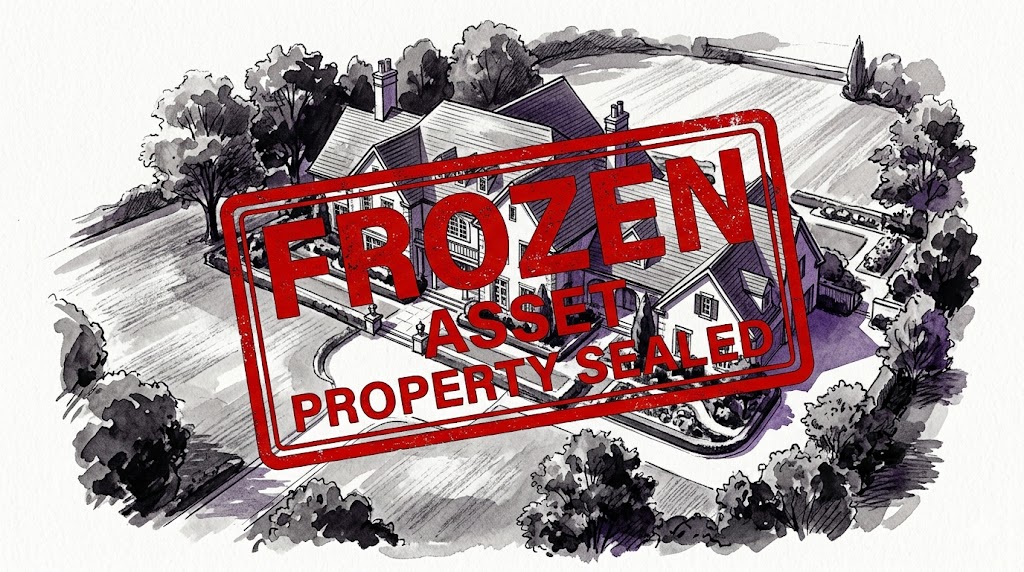
1. Your assets freeze immediately.
Bank accounts, investment accounts, and real estate can be locked the moment the court takes jurisdiction. Your family cannot access those funds while they are grieving. Mortgage still due. Funeral costs still due. Bills still accumulating. The court will get to it on the court’s timeline.
2. Probate drains your estate.
Probate costs typically range from 5% to 15% of an estate’s total value, according to multiple legal sources. On a $500,000 estate, that is between $25,000 and $75,000 consumed before your family receives a dollar. Attorney hourly rates for probate work range from $200 to $500 per hour depending on location and complexity. These fees are paid from the estate—reducing what your family actually receives.
3. Everything becomes public record.
Your assets, your debts, your beneficiaries—all of it is filed in the public court record, viewable by anyone. Distant relatives who have not spoken to your family in decades can see it. Scammers can see it. Anyone with a claim, legitimate or not, now knows exactly what is at stake.
4. The timeline is measured in months and years—not days.
Simple probate cases can take six months to a year. Complex cases frequently take two years or more. Contested estates can stretch far longer. Throughout that entire period, your family is waiting, paying legal fees, and unable to fully move on.
5. Family conflict explodes.
Probate court is a public arena that effectively invites challenges to your estate. Disgruntled relatives, creditors, and anyone who believes they were promised something now have a legal forum to pursue it. Attorney fees for those disputes come from the estate itself—reducing the inheritance for everyone.
6. A judge decides who raises your children.
If you have minor children and die without a properly executed estate plan, a judge who has never met your family—and likely met them five minutes ago—decides who will raise them. Not you. A government employee following a process.
The 7 Documents That Form a Complete Estate Plan
A proper estate plan is not a single document. It is a coordinated set of seven legal instruments, each serving a specific protective function.
Document 1: Revocable Living Trust
This is the foundation. A revocable living trust is a private legal contract that holds your assets and directs their distribution to your beneficiaries without going through probate court. Because the trust—not your estate—owns the assets, there is no probate trigger. Distribution can happen in weeks rather than years.
It is “revocable” because you maintain full control during your lifetime. You can change it, add assets, remove assets, or dissolve it entirely.
Document 2: Pour-Over Will
A pour-over will is a companion document to your trust. Its purpose is to catch any assets you forgot to transfer into your trust and direct them into the trust at your death. Think of it as a safety net.
One critical note: assets caught by a pour-over will still pass through probate before entering the trust. This is exactly why funding your trust—covered below—is the most important step in the entire process.
Document 3: Financial Power of Attorney
This document designates a trusted person to manage your financial affairs if you become incapacitated—due to dementia, a stroke, a serious accident, or any other event that leaves you unable to act for yourself. Without it, your family must petition a court for permission to pay your bills, access your accounts, or manage your property while you are hospitalized. That court process takes time and money your family does not have.
Document 4: Healthcare Power of Attorney
Same concept, different domain. This document names the person who makes medical decisions for you when you cannot make them yourself. Without it, hospitals default to internal protocols, and your family members may have conflicting ideas about your care—creating conflict during one of the most painful moments they will experience.
Document 5: Living Will (Advance Directive)
A living will communicates your end-of-life wishes to your medical team directly. Do you want to be kept alive on machines? Under what conditions? For how long? What happens if you are in a persistent vegetative state?
Without this document, your family guesses. Then they disagree. Then the hospital’s ethics committee steps in. You have the opportunity to remove that burden from the people you love by writing your wishes down and making them legally binding now.
Document 6: HIPAA Authorization
The Health Insurance Portability and Accountability Act (HIPAA) restricts who can receive your medical information. Without a signed HIPAA authorization, hospitals may refuse to give your spouse, your children, or anyone else substantive updates about your condition—even if you have a Healthcare Power of Attorney. This document fills that gap and ensures your designated people can actually get the information they need.
Document 7: Certificate of Trust
A certificate of trust is a condensed summary document that proves your trust exists without exposing its private details. Banks, title companies, and brokerage firms will ask for it when you go to transfer assets. Rather than handing them your full 40-page trust document, you present the certificate—a kind of legal ID card for your trust.
The Step That Makes or Breaks All Seven Documents
Having all seven documents does not protect your family. One additional step does.
You must fund your trust.
Funding a trust means actually transferring your assets into it—re-titling your real estate, retitling financial accounts, updating beneficiary designations, and making the trust the legal owner of the assets you want it to hold. Until you do this, your trust is a legal shell. It exists on paper. It protects nothing.
This is not a hypothetical concern.
Michael Jackson died in 2009 with a revocable living trust—specifically designed to keep his estimated $500 million estate out of probate court and protect his children. But he never funded it. He never transferred his assets into the trust. As a result, his entire estate was forced into probate, triggering years of public court battles between family members, executors, and the IRS. The dispute over his estate’s value alone—the IRS assessed it at over $1.1 billion while executors valued it at roughly $7 million—kept the estate entangled in legal proceedings for well over a decade.
His trust existed. His trust failed. Because it was never funded.
The same scenario plays out in far less famous families every day. Research consistently shows that a large portion of trusts created in the United States are never properly funded—meaning the families who believe they are protected are not.
Why Most People Haven’t Done This Yet
Understanding probate is one thing. Acting is another. Three reasons account for most of the delay.
“I’ll get to it later.”
Later has a cost. A car accident, a stroke, a sudden diagnosis—none of them wait for your schedule. Every day without a funded estate plan is a day your family’s financial security depends on nothing bad happening.
“I don’t have enough assets to worry about this.”
The government does not have an asset threshold below which probate does not apply. If you own a house, a bank account with meaningful savings, a retirement account, or cryptocurrency—you have an estate. Any of those can trigger probate. Even modest estates lose thousands of dollars and years of time in the process.
“It feels overwhelming.”
This is the most honest answer—and the most fixable one. Estate planning has a reputation for being complicated because the traditional attorney process is complicated. It doesn’t have to be.
The 3 Ways to Get an Estate Plan—and What to Know About Each
Option 1: Traditional Attorney
The traditional route involves hiring an estate planning attorney to draft your documents. The quality is generally high. The timeline is often three to nine months. Hourly rates typically run $250–$500 per hour for revisions. And in most cases, attorneys hand you a binder of documents and leave the trust funding process entirely to you—with no guidance on how to do it.
Given that a large percentage of trusts are never properly funded, this gap is the single biggest failure point in traditional estate planning.
Option 2: DIY Online Templates
Platforms like LegalZoom offer fast, inexpensive document generation. The tradeoff: cookie-cutter documents that may not comply with your state’s laws, no guidance on funding, and no way to know something went wrong until it’s too late—and by then, you won’t be around to fix it.
Cheap now. Potentially catastrophic later.
Option 3: Enduring Legacy Mentors
Enduring Legacy Mentors was built specifically to close the gap between document creation and actual protection.
🌳 Attorney-approved, customized estate plan documents
🌳 Delivered in 7 business days (barring anything outside of our control)
🌳 Unlimited revisions for 365 days
🌳 Trust funding education—clients learn how to fund a trust
🌳 Trustee training—the person who will execute your plan learns how to do it correctly
That last two items are what most estate planning services skip entirely. And they are exactly what the difference between a funded trust and an empty one.
Your Next Step
You are at a fork in the road.
One path is inaction. Your family hits probate court. Years of delays. Thousands in fees. Every financial detail you worked to keep private now public. Court battles between people you love. And a judge—a stranger—making decisions you should have made.
The other path is a complete, funded, working estate plan that means your family never sets foot in a courtroom because of your death.
Download the free Legacy Plan—a plain-English summary of all seven documents, what they do, and what you need.
The best time to do this was the day you acquired something worth protecting. The second-best time is today.
Disclaimer: This article provides educational information about estate planning and asset protection strategies. It is not legal, tax, or financial advice. Every situation is unique and requires personalized guidance from qualified professionals. Laws vary by state and change frequently. Consult with licensed attorneys, CPAs, and financial advisors before implementing any strategies discussed.
Share this post

SK
Seth Kniep
Co-Founder & Managing Partner, Strategy & Stewardship
Recommended articles
Essential guides to protect and preserve your family’s wealth.

Stay informed about wealth protection
Get expert strategies and practical insights delivered to your inbox.
Focused guidance from our team. No noise. Pure knowledge.