
You did the hard part. You sat down, made the tough decisions, and signed your revocable living trust. It feels finished.
It isn’t.
A signed trust is an empty box until you put your assets inside it. And the day you walk into your bank to move your accounts in, you’re going to hit resistance you never saw coming.
This article shows you why that happens, what your bank is legally allowed to demand, and the exact words to use when they push back.
A signed trust and a funded trust are not the same thing
Here’s the part most people miss: a trust only controls what is actually titled in its name.
Sign a beautiful trust, leave your bank account in your personal name, and that account doesn’t follow your trust’s instructions. It runs through probate instead—the public court process your trust was supposed to help you avoid.
This isn’t a rare slip-up. Estate planning attorneys see “empty” trusts constantly: an impressive binder, a detailed document, and not a single asset ever retitled. Industry estimates commonly cited in the field suggest that roughly 30 to 40 percent of living trusts are never fully funded—meaning the money people spent on the document bought them almost nothing except a false sense of security. Real Cost Report
And the stakes are real. The average probate process costs 3 to 8 percent of an estate’s value in personal representative fees, attorney fees, accounting fees, appraisals, and other costs. A modest estate can take anywhere from six months to two years to clear probate. AcadviserAcadviser
Funding your trust is how you avoid all of that. And funding starts at the bank.
Why your bank fights you
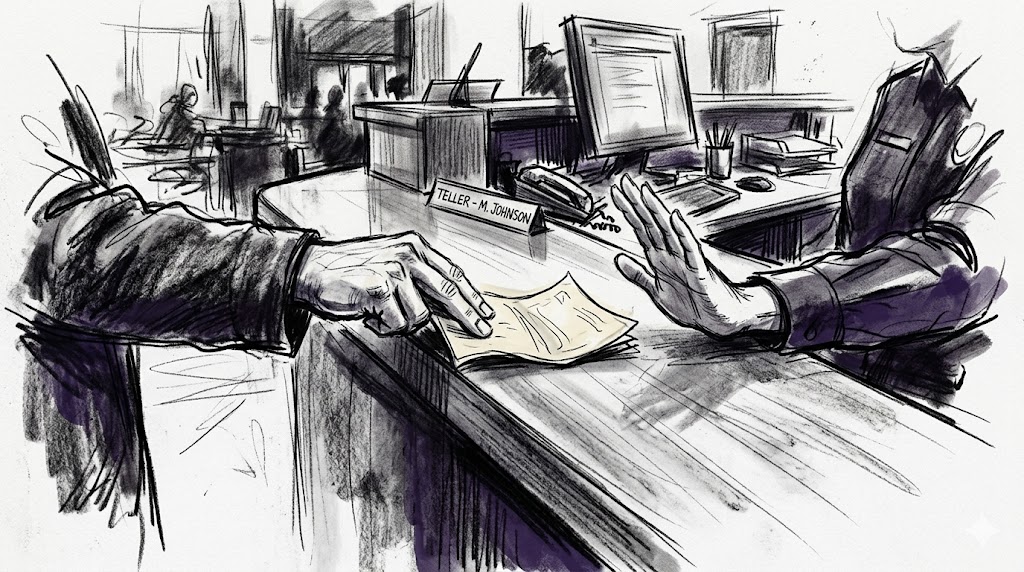
Walk in with your Certificate of Trust and say, “I need to retitle my account into my trust,” and you may get a blank stare.
Your bank isn’t evil. The problem is simpler than that. The teller in front of you is often undertrained on trusts, scared of personal liability, and worried about doing something wrong. So they default to “no,” because “no” feels safe.
That’s the whole battle in one sentence: untrained caution dressed up as policy.
The 5 objections you’ll hear (and what they really mean)
“We can’t do that here.” Translation: I don’t know how, and I don’t want to ask my manager.
“You need to open a business account.” Translation: I think a trust is a business. I’m wrong, but I’m confidently wrong.
“We need to see the entire trust document.” Translation: We’re going to make this painful—and ask for private documents we don’t legally need.
“That will trigger taxes.” Translation: I don’t understand what a revocable living trust is.
“Just add a payable-on-death designation instead.” Translation: I want you to leave, so I’m offering a shortcut.
None of these objections hold up. You just need the right tools to answer them.
Bring the right weapons
You don’t win a battle without the right gear. Bring exactly this:
1. Your Certificate of Trust—not the full trust document. This is a condensed legal document that proves the trust exists, names you as trustee, and shows the trust date. It does not reveal your beneficiaries or your private terms.
2. Your driver’s license.
3. Your most recent account statement.
That’s it. Notice what’s missing: your 40-plus-page trust document. Your bank doesn’t need it, and you shouldn’t hand it over.
The law is already on your side
Here’s the fact that changes everything.
The Uniform Trust Code—a model law adopted by a majority of states—established in Section 1013 the right of a trustee to present a Certificate of Trust instead of the full trust instrument. The whole point was to protect your privacy. Third parties get the specific information they need to protect themselves, and nothing more. Uslawexplained
It goes further. In many states that adopted the code, a person who demands the full trust document in addition to a certification—and does so in bad faith—can be held liable for damages. West Virginia Legislature
You’re not asking for a favor. You’re asking your bank to follow the law.
The word-for-word script
Walk up and say:
“I need to retitle my personal account into my revocable living trust. I’m the grantor and the trustee, so nothing changes except the account name. Here’s my Certificate of Trust—a legal document that proves the trust exists.”
If they say, “We need the full trust”:
“Under [your state] law, you’re required to accept this certification instead of my full trust document.”
If they ask, “How do we retitle it?”:
“The name on my account needs to be changed to: [Your Name], Trustee of the [Trust Name] dated [Date].”
If they still push back:
“I understand this might not be something you do every day. Can you bring in a manager or someone who handles trust accounts? I’m happy to wait.”
And if the manager resists too:
“I’d like to speak with your compliance officer or trust department. Under the [your state] Trust Code, financial institutions are required to accept a Certificate of Trust. This is standard estate planning. If your bank can’t accommodate it, I’ll need to move my accounts to a bank that can.”
That last line works like magic. Banks hate losing customers.
Banks that make this easy
Some institutions handle trust funding far better than others:
Charles Schwab—well-versed in trust accounts.
Fidelity—strong if you also have brokerage needs.
Most local credit unions—smaller, more flexible, and often genuinely helpful.
Avoid any bank that treats you like a ticket number and staffs its branches with people who’ve never seen a Certificate of Trust.
Pro tips that turn a headache into 15 minutes
Don’t bring your full trust document. It’s long and full of private details about your beneficiaries. The Certificate of Trust is all they legally need.
Go during off-peak hours. Tuesday through Thursday mornings. Not lunch, not Friday afternoon, not the day before a holiday.
Call ahead and ask for the branch manager by name. “I need to retitle an account into my trust—can I schedule 15 minutes with [Manager Name]?” This sets expectations before you arrive.
Get confirmation in writing. After they retitle it, request a new statement showing the trust as owner. Verify the exact name format is correct.
The bottom line
Your bank will fight you because it’s scared and untrained. But you have the law, the right documents, and the right words.
Bring the Certificate of Trust. Use the script. Escalate if you need to. Walk if they refuse.
Because here’s the truth that should keep you moving: a trust that isn’t funded can’t protect anyone. Don’t let an undertrained teller stand between your family and the protection you built for them.
Disclaimer: This article provides educational information about estate planning and asset protection strategies. It is not legal, tax, or financial advice. Every situation is unique and requires personalized guidance from qualified professionals. Laws vary by state and change frequently. Consult with licensed attorneys, CPAs, and financial advisors before implementing any strategies discussed.
Share this post

SK
Seth Kniep
Co-Founder & Managing Partner, Strategy & Stewardship
Recommended articles
Essential guides to protect and preserve your family’s wealth.

Stay informed about wealth protection
Get expert strategies and practical insights delivered to your inbox.
Focused guidance from our team. No noise. Pure knowledge.