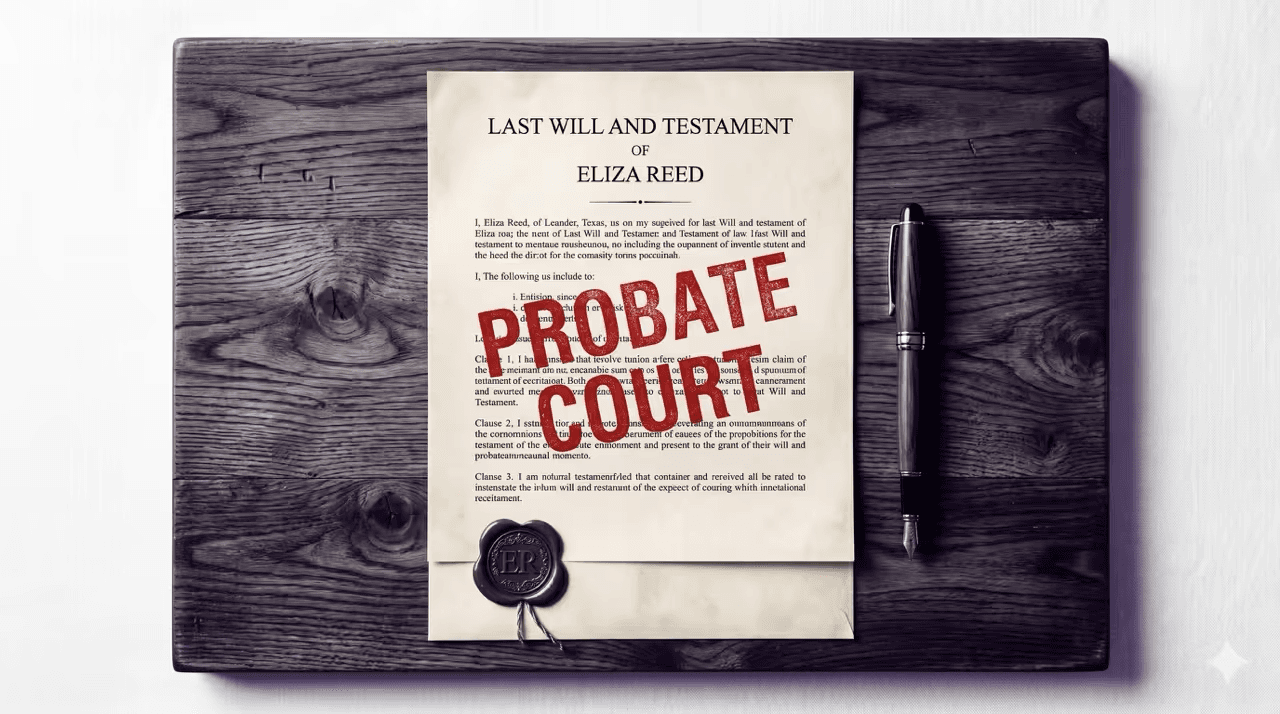

Most people who have a will believe they’ve done the responsible thing. They sat down with an attorney, paid the fees, signed the documents, and walked away with the quiet confidence of someone who has protected their family.
Here’s the hard truth: they haven’t.
A will does not protect your family from probate court. A will guarantees it.
Understanding why—and what to do about it—could be the most important financial education you receive this year.
The Lie That Gets Passed Down Through Generations
The belief that “having a will means your family is set” is one of the most widespread and costly misconceptions in personal finance. It gets repeated at kitchen tables, in financial advisor offices, and even by attorneys who benefit from the very system a will feeds.
Here’s an analogy worth sitting with: saying “I have a will, so my family won’t have to go through probate court” is the same as saying “I have a speeding ticket, so I won’t have to go to traffic court.” The document doesn’t keep you out of court—it’s the reason you go.
A will is, by legal design, an instruction manual written for a probate judge. It tells the court what you want. And then the court decides whether to honor it—after you’re already gone and cannot speak for yourself.
What Is Probate—and Why Does It Matter?
Probate is the court-supervised legal process of authenticating a will, inventorying a deceased person’s assets, settling outstanding debts and taxes, and distributing what remains to beneficiaries.
It sounds orderly. In reality, it is slow, expensive, public, and deeply disruptive to grieving families.
And if you die with a will—even a well-written, carefully crafted will—your estate goes through it. Every time.
The 8 Stages of Probate (What Really Happens When You Die With a Will)
Stage 1: You Die
Your estate is immediately subject to the jurisdiction of the probate court in your state.
Stage 2: Your Family and Assets Enter Probate Court
Not maybe. Not sometimes. Always. Regardless of the size of your estate or the clarity of your will, a will triggers probate. There are no exceptions for “simple” estates in most states.
Stage 3: Your Family Hires a Probate Attorney
Probate attorneys typically charge hourly rates ranging from $150 to $500 per hour, a flat fee, or in states like California, a statutory percentage of the gross estate value. In California specifically, both the attorney and the executor are each entitled to statutory fees based on the same percentage scale—meaning you’re paying that structure twice.
On a $1 million California estate, that’s $23,000 to the attorney and another $23,000 to the executor—$46,000 in statutory fees before court costs, appraisal fees, or any disputes. Initial retainers for probate representation typically run $3,000–$7,000 just to begin.
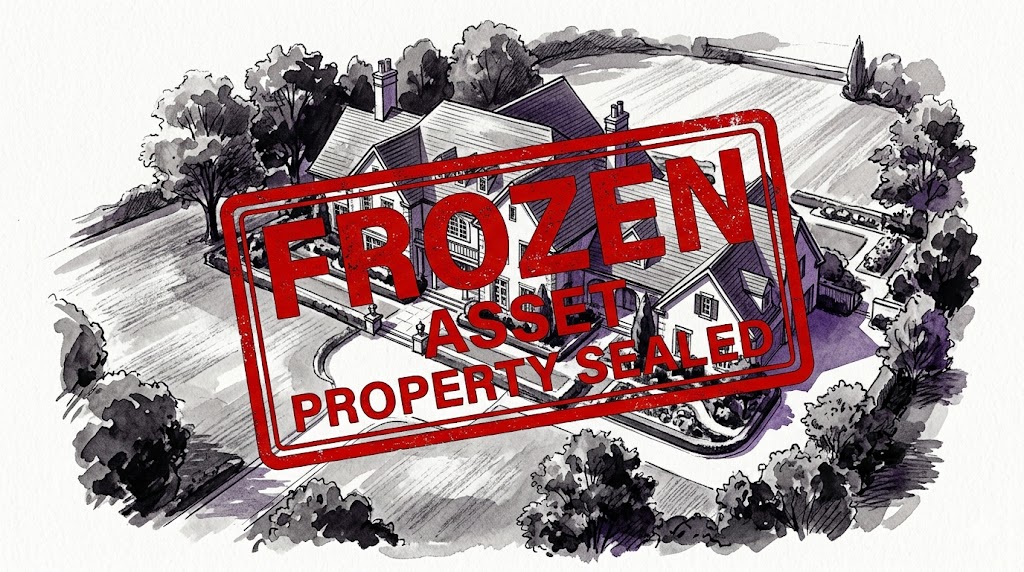
Stage 4: Your Assets Are Frozen
Bank accounts, real estate, investment portfolios—all frozen until the probate court releases them. Your family cannot sell the house. They cannot access the savings. They cannot liquidate investments. Not until a judge says so.
Stage 5: Your Family Waits
The average probate case in the United States takes between 12 and 24 months. Contested estates—where someone challenges the will or disputes the asset distribution—frequently stretch from 3 to 10 years. Howard Hughes’ estate famously took 34 years to fully resolve.
And those delays are not rare anomalies. They are the predictable result of a court system processing thousands of estates at once, with no incentive to move quickly.
Stage 6: Everything Becomes Public Record
This is the stage most people never consider until it’s too late.
Every asset you own. Every debt you owed. Every beneficiary you named. Your business interests. Your real estate holdings. Your bank account balances. All of it becomes part of the public court record, accessible to anyone—including identity thieves, scammers, and anyone who wants to contest the estate.
Decades ago, accessing this information required a physical trip to a government office. Today, a single online search is enough. This public exposure creates a breeding ground for fraud and invites legal challenges from people who might never have come forward otherwise.
The court is also legally required to notify all potential creditors of the estate—essentially advertising the opportunity to file claims. Every claim approved reduces what’s left for your family.
Stage 7: The Court Takes Its Cut
Probate costs are not trivial. Multiple independent studies and legal sources confirm that the combined costs of probate—court filing fees, attorney fees, executor fees, appraisal fees, accounting fees, bond premiums, and publication fees—typically consume between 5% and 15% of the total estate value.
On a $500,000 estate, that’s $25,000 to $75,000 in costs. On a $1 million estate, the total bill frequently exceeds $50,000–$100,000, and can go significantly higher when disputes arise or the estate is complex.
These costs come directly out of the assets you intended to leave your family.
Stage 8: Your Family Gets What’s Left
After the lawyers are paid, after the court takes its fees, after the creditors make their claims, after the judge makes the final rulings—your family receives whatever remains. Often 12 to 24 months after you died. Sometimes longer.
Why Didn’t Your Attorney Tell You This?
This is a question worth asking directly.
Attorneys who draft wills frequently earn significantly more money from the probate process that follows than from the will itself. In California, as noted above, probate attorney fees are set by statute as a percentage of the estate’s gross value. On a $1 million estate, that’s $23,000—guaranteed, by law. On a $2 million estate, $33,000.
A trust, by contrast, is a one-time planning document that, when properly funded, eliminates the need for probate entirely. An attorney who sells you a trust rather than a will removes themselves from a potentially lucrative future engagement.
Not every attorney operates this way. Many are principled professionals who genuinely prioritize their clients’ interests. But the financial incentive is structurally built in—and it’s worth understanding before you accept the advice “just get a will.”
The Real-World Consequences: Stories That Should Have Ended Differently
Michael Jackson
Michael Jackson created a revocable trust to provide for his children and his mother, Katherine. It was a thoughtful plan—on paper. The problem? He never funded it. He failed to transfer his assets into the trust before he died.
Because the assets weren’t inside the trust, his estate was forced into probate. What followed was over a decade of litigation, including a major IRS dispute over the estate’s valuation that wasn’t resolved until more than 12 years after his death. His family received an “allowance” from a frozen estate while the courts worked through it. Even today, legal battles related to his estate continue.
Prince
Prince died in 2016 with no estate plan whatsoever—no will, no trust, nothing. His estate, valued at approximately $156 million, entered probate immediately. The case wasn’t resolved until 2022—six years later. By then, taxes and fees had consumed a massive portion of the estate, with estimates suggesting the total was cut nearly in half.
Larry King
Larry King had a trust. He understood the value of proper planning. But he failed to transfer approximately $2 million of his estate into it. That $2 million went to probate court, where his widow and son battled for 17 months over who should receive it.
The lesson from Larry King is subtle but critical: a trust only protects what’s inside it. Creating the document is step one. Funding it—transferring your actual assets into it—is the step most people skip.
Will vs. Trust: The Critical Difference
A will is a public court document that guarantees probate. A trust is a private contract that bypasses it.
“But Don’t I Still Need a Will If I Have a Trust?”
Yes—but for an entirely different purpose.
When you pair a will with a properly funded trust, that will becomes what estate planning attorneys call a “pour-over will.” Its single function is to catch any assets that weren’t transferred into the trust during your lifetime and direct them into the trust upon your death.
A pour-over will also names guardians for minor children—something a trust cannot do.
So the correct framing is this: you can have a trust without a will, but you should not rely on a will without a trust. The will alone guarantees the very outcome you’re trying to prevent.
The Numbers Behind the Problem
The scope of this issue is staggering:
Only 31% of Americans have a will. Only 11% have a trust. And 55% have no estate planning documents at all, according to the 2025 Trust & Will Estate Planning Report—the largest study of its kind, based on 10,000 adults surveyed.
Probate costs typically consume 5%–15% of an estate’s total value, according to multiple legal sources.
The average probate case takes 12–24 months. Contested cases frequently last 3–10 years.
Over 35% of U.S. adults say they or someone they know has experienced family conflict directly caused by inadequate estate planning.
The problem isn’t that people don’t care about protecting their families. It’s that they’ve been given incomplete—and sometimes financially motivated—information about how to do it.
What You Should Do Right Now
If you currently have a will but no trust, here is what that means practically: your family is headed to probate court when you die. That is not speculation. It is the legal function of the document you hold.
The solution is a properly structured, properly funded revocable living trust—paired with a pour-over will, powers of attorney, and healthcare directives that complete the full estate plan.
The trust must be funded. That means transferring your real estate, bank accounts, investment accounts, and other assets into the trust while you are alive. A trust sitting in a drawer with no assets in it is, as Michael Jackson’s estate demonstrates, no protection at all.
And the process doesn’t have to take months or cost a small fortune. At Enduring Legacy Mentors, we deliver attorney-approved, customized estate plans in 7 business days—with full training on how to fund your trust across all asset categories so it actually works.
Because a plan that doesn’t work isn’t a plan. It’s just a false sense of security.
Disclaimer: This article provides educational information about estate planning and asset protection strategies. It is not legal, tax, or financial advice. Every situation is unique and requires personalized guidance from qualified professionals. Laws vary by state and change frequently. Consult with licensed attorneys, CPAs, and financial advisors before implementing any strategies discussed.
Share this post

SK
Seth Kniep
Co-Founder & Managing Partner, Strategy & Stewardship
Recommended articles
Essential guides to protect and preserve your family’s wealth.

Stay informed about wealth protection
Get expert strategies and practical insights delivered to your inbox.
Focused guidance from our team. No noise. Pure knowledge.